
🐶❤️🐶 Pepper is such a good boy! 🐶❤️🐶
Here are some dog photos to brighten your day 😊.

Here’s your daily dose of doggy goodness!
Every day, we celebrate our shared love of dogs and hopefully brighten your day. Enjoy!
Dog of the Day: Pepper!

Meme of the day: I see some very wise boys.

| You May Like | ||||||||||||||||||
Subscribe to our sister newsletter!
|

The Great Chase: Why Dogs Go After Cats
The classic image of a dog chasing a cat is a familiar one, often played for laughs in cartoons and movies. But why do dogs have this seemingly ingrained instinct to pursue our feline friends? The answer lies in a combination of instinct, prey drive, playfulness, and even territorial behavior.
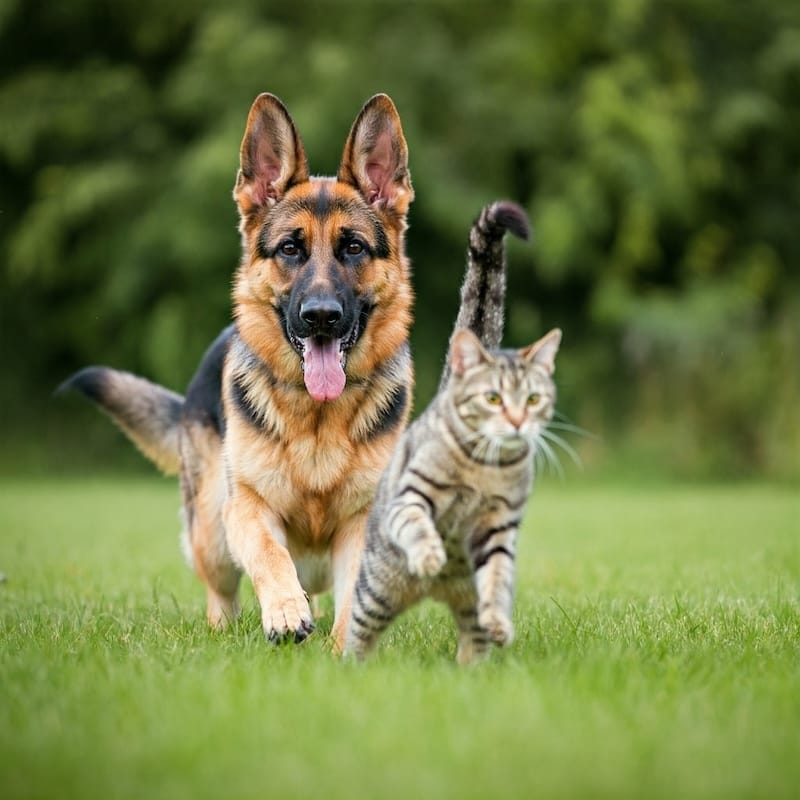
One of the primary reasons dogs chase cats is their innate prey drive.1 Dogs are descendants of wolves, who are natural predators.2 This instinct to chase moving objects, especially smaller, fleeing creatures, can be triggered by the sight of a cat darting away.3 For some dogs, this chase is purely instinctual, a leftover behavior from their wild ancestors.4
However, not all chases are predatory in nature. For many dogs, chasing a cat can be a form of play.5 They might enjoy the thrill of the chase, the excitement of the pursuit, without any intention of harming the cat. This is especially true if the dog has grown up with cats and has learned to interact with them in a playful manner.
Territorial behavior can also play a role in dog-to-cat chases. Dogs may perceive cats as intruders in their territory and chase them away to defend their space. This is more common in dogs with strong territorial instincts or those who are not well-socialized with cats.
In some cases, dogs may chase cats simply out of curiosity or excitement. The cat's quick movements and unpredictable behavior can be stimulating for a dog, triggering their instinct to investigate and explore.
It's important to remember that not all dogs chase cats, and the intensity of the chase can vary greatly depending on the dog's breed, personality, and past experiences. If you have both dogs and cats in your household, it's crucial to introduce them properly and supervise their interactions to ensure everyone's safety and well-being. Training your dog with commands like "leave it" and providing them with plenty of exercise and mental stimulation can also help reduce unwanted chasing behavior.
References
American Kennel Club (AKC). (n.d.). How to Introduce a Dog to a Cat.
Landsberg, G. M., Hunthausen, W., & Ackerman, L. (2013). Behavior problems of the dog and cat. Elsevier Health Sciences.
Overall, K. L. (2013). Manual of clinical behavioral medicine for dogs and cats. Elsevier Health Sciences.
Do you have questions about dogs? Respond to this email to send in your question, and we’ll add it to our list!
Family photo of the day: Tucker!

We want to feature your pup!
We want to share your pup with our pack. Email us your favorite doggy pic or video with your pup’s name, and we'll try to feature it as a family photo in one of our upcoming newsletters or on our Facebook page.
Share our newsletter with your friends!
We’ll donate on your behalf!
🐶 Refer 10 people: we will donate a box of treats to an animal rescue 🐶
🐕️ Refer 50 people: we will donate a bag of dog food to an animal rescue 🐕️
🛏️ Refer 100 people: we will donate a dog bed to an animal rescue 🛏️
You currently have 0 referrals, only 2 away from receiving Dog Safety Guide.
| You May Like | ||||||||||||||||||
Sources:
Dog of the day: IG pepperthenorfolk
Meme of the day: IG scottishstantheman